Annie Whittaker
The GiftAnnie Whittaker is the younger daughter of Elizabeth and John Whittaker and the cherished little sister of Tommy. Born as an unexpected second child when Elizabeth was forty-one, she is with her family for only five and a half years before meningitis kills her. Her short life and final words become the emotional center of the Whittakers’ bereavement—and a lasting presence in the relationships and choices that follow her death.
Identity and Early Family Life
Annie arrives after her parents have given up expecting another child. They had tried for years; by the time she was born, Tommy was ten, and the family had settled into the belief that he would be their only child. Tommy had been a loving, capable boy with a full life of school and sports, and he initially adjusted to the idea of a baby sister. Over the next five and a half years, however, Annie became the focus of his affection. He adored her, and the two shared a closeness that filled the Whittaker home with laughter.
Elizabeth reshaped her work around Annie, moving from full-time teaching to substitute teaching so she could enjoy what she called her last baby. She spent much of the day with her, reading, baking, and helping at Annie’s kindergarten. John supported the family through the wholesale produce business inherited from his father and grandfather. The household seemed secure and warm, a place where all four could feel sheltered from the troubles that touched other people. Annie’s presence was part of what made that security feel complete.
Illness and Death
During the family’s Christmas season, Annie becomes gravely ill. In the hospital, tests confirm meningitis; her fever reaches 106.9 degrees, her neck is rigid, and she remains unconscious. The doctors can do little to reverse the disease. Elizabeth refuses to leave her daughter’s bedside, holding her hand and speaking to her for hours, while John and Tommy take turns beside her and in the corridor, overwhelmed by what they cannot change.
After Tommy has been taken from the room because he is distraught, Annie briefly stirs. She squeezes Elizabeth’s hand, opens her eyes, and looks at her parents. She says that she loves them, asks for Tommy, and, when he is brought back to her, looks toward him too. She then whispers, “thank you.” Tommy takes the moment as a sign that she is recovering; Elizabeth senses that it is instead a farewell. Annie closes her eyes and does not wake again. Near midnight, Elizabeth and John remain beside her, holding her hands as she dies. Her family understands her brief awakening as a final chance to express love and gratitude, and the image of a child who came to them as a gift becomes inseparable from the pain of losing her.
Relationships and the Family’s Grief
Annie’s bond with Tommy continues to shape his life after her death. Their everyday habits—meeting after school in the kitchen for milk and cookies, sharing jokes and confidences—make the absence concrete. Tommy cannot bear to return to the house and sit at the table without her. He stays at hockey practice as long as he can, eats alone by the stove or takes cookies and milk to his room, and avoids the family meals that once brought them together.
Her parents also withdraw into separate grief. Friends visit at first, then the Whittakers stop seeing them; John comes home later from work, Elizabeth seems not to eat, and the three surviving family members avoid one another because being together makes the missing fourth presence impossible to ignore. Tommy’s grief has nowhere to go: at school, people know what happened but do not speak to him about Annie. The family’s silence and separation show how the loss affects not only each individual but the ties between them.
A Continuing Presence
Annie remains a presence in Tommy’s life through memory and the rituals he builds around her grave. The small headstone gives her full name as Anne Elizabeth Whittaker and bears a carved lamb. Tommy keeps the grave neat, visits to speak to her, and tells her that he will return and loves her. Maribeth’s idea that some people pass through a life to bring a gift helps him understand Annie’s short life in a new way: it does not make him wish she had not stayed longer, but offers a way to hold her brief time alongside what she gave the family.
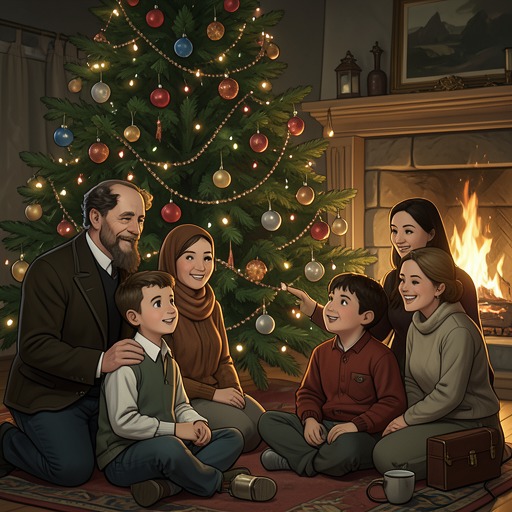
For Elizabeth, returning to the cemetery is initially too painful. In the week before Christmas, she finally visits Annie’s grave and finds the little tree that Tommy and Maribeth brought there, still standing with its ornaments. She straightens it and remembers Annie’s careful hands placing the decorations. The grief remains, but it has become bittersweet rather than wholly unbearable. The tree and ornaments allow Elizabeth to encounter her daughter through familiar objects and shared acts of remembrance.
Legacy in the Story
Annie’s influence extends beyond the Whittaker family. Maribeth, who never knew her, comes to understand her through Tommy’s memories and Elizabeth’s affection. When Maribeth stays with the Whittakers, she tells Elizabeth that she dreams about Annie and feels that the child remains in their hearts and minds. Elizabeth agrees, recalling the five years as a gift that taught her about laughter, love, and giving. Maribeth connects Annie’s short life to her own unborn child: even a brief relationship can matter, and she wants to give her baby the lasting gift of parents who will love it.
That understanding informs Maribeth’s request that Elizabeth and John adopt her baby. After Kate is born, Maribeth signs the adoption papers and chooses not to have the baby brought to her that day, so she can begin to mourn the separation. Elizabeth becomes Kate’s mother, while Maribeth accepts that she will not raise her. The family agrees that Kate will initially know Maribeth as their friend, not as her birth mother. The decision does not erase loss or make the relationships simple; it gives Annie’s legacy a new form in an act of care that brings hope back into the household. Elizabeth and John also offer Maribeth the education fund they had set aside for Annie, supporting her plan to finish school and attend college. Annie’s life is brief, but her memory helps the surviving characters recognize love not only as the joy of keeping someone, but also as the care that can endure through separation.